
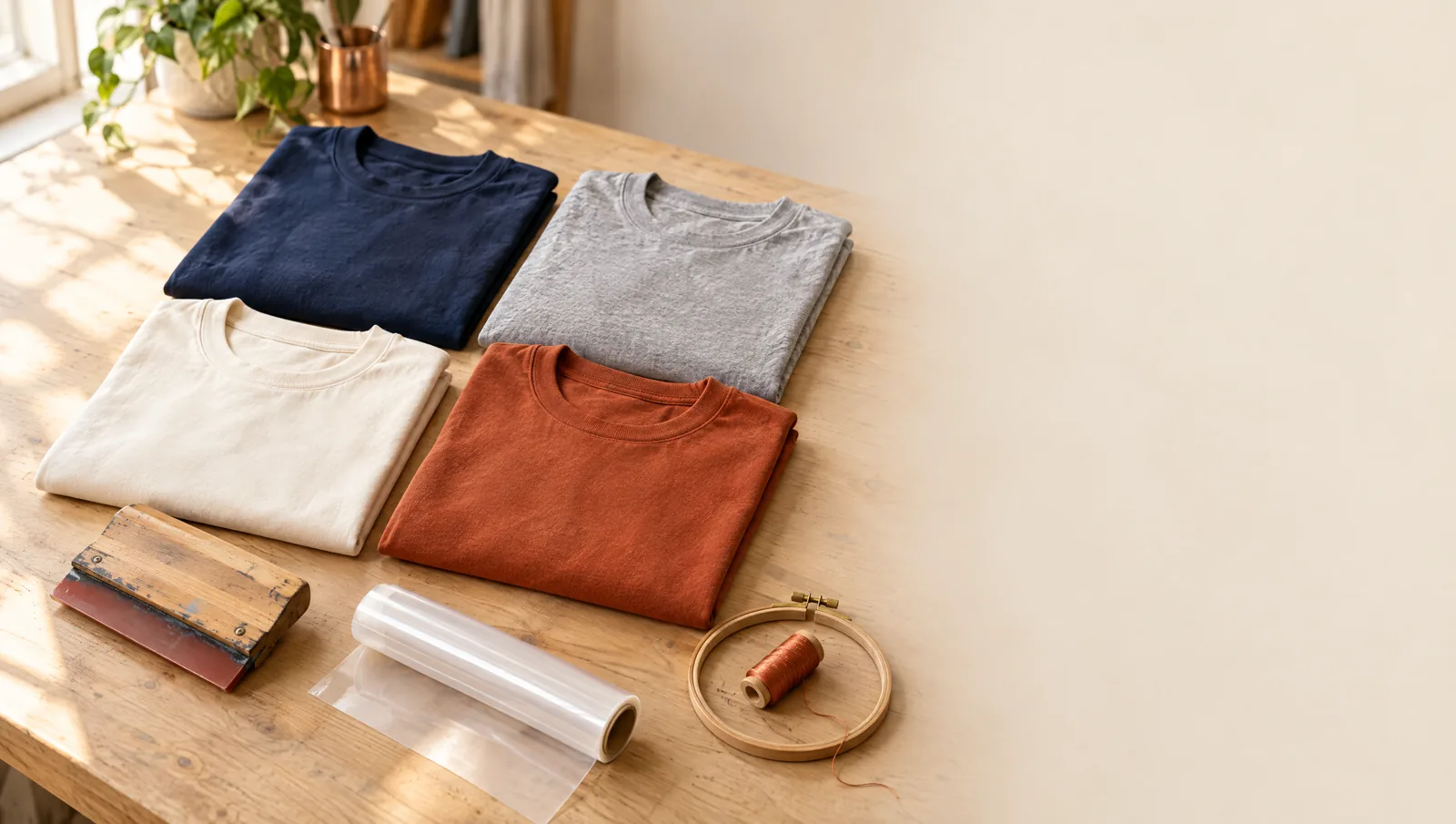
The main types of t-shirt printing are screen printing, DTF (direct-to-film) printing, sublimation, direct-to-garment (DTG) and heat transfer vinyl, with embroidery as the stitched alternative. The right one depends on four things: how many shirts you need, how many colors are in the design, what the fabric is, and the finish you want.
Key takeaways
- Screen printing is usually the best value when a group orders the same design in larger quantities.
- DTF printing handles full-color, detailed art and small runs, and DDESIGNS has no minimums for DTF.
- Sublimation dyes the design into light-colored polyester, so it suits jerseys and all-over prints.
- Embroidery stitches the logo in thread, which suits polos, jackets and hats.
- Your quantity, color count and fabric matter more than which method is “best.”
What are the different types of t-shirt printing?
There are five common types of t-shirt printing, plus embroidery. Each one puts the design on the shirt in a different way, which changes how it looks, how it feels, and what it costs at your quantity.
| Method | How the design gets on the shirt | Usually a good fit for | Watch for |
|---|---|---|---|
| Screen printing | Ink pushed through a mesh screen, one screen per color | The same design on a larger group order | Setup for each color; minimum confirmed at quote |
| DTF printing | Design printed on film, then heat-pressed onto the shirt | Full-color art, small runs, mixed garments | Print sits on top of the fabric |
| Sublimation | Dye turned to gas with heat and bonded into polyester | Jerseys, performance wear, all-over designs | Needs light-colored, high-polyester fabric |
| Direct-to-garment (DTG) | Inkjet printer sprays ink straight onto the shirt | One-off, photo-style prints on cotton | Not a DDESIGNS service |
| Heat transfer vinyl | Shapes cut from vinyl sheets and pressed on | Simple names and numbers | Not a DDESIGNS service |
| Embroidery | Design stitched into the fabric with thread | Polos, jackets, hats, left-chest logos | Fine detail and very large designs |
DDESIGNS, a family-run custom apparel shop in Springfield, Missouri, offers screen printing, DTF printing, sublimation and embroidery. DTG and vinyl are covered here so you can compare, but they aren’t on the DDESIGNS service list.
How does screen printing work, and when is it the best choice?
Screen printing pushes ink through a fine mesh screen onto the shirt, with a separate screen for each color in the design. Because the setup is shared across every shirt in the run, it usually gives the best value when a school, church or business orders one design in quantity.
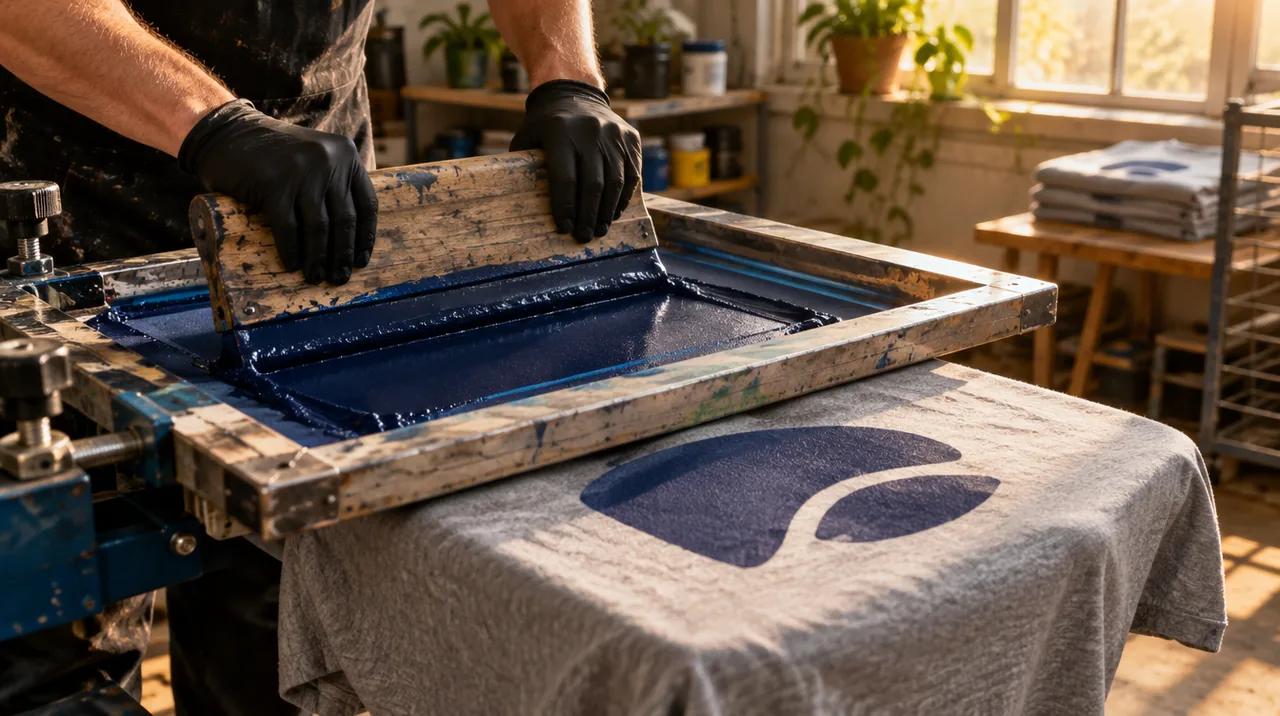
Screen printing is where DDESIGNS started in 2008. A few things to know before you choose it:
- Fewer colors keep the cost down. Every color is its own screen and setup, so a two-color design costs less to set up than a five-color one.
- One design across shirt colors is efficient. The same art on navy, gray and white shirts reuses the same screens.
- It has a minimum. DDESIGNS confirms the screen printing minimum with your quote.
Learn more about screen printing at DDESIGNS.
What is DTF printing good for?
DTF (direct-to-film) printing prints your design onto a special film, adds an adhesive powder, and heat-presses the transfer onto the shirt. There are no screens, so it handles full-color artwork, gradients and small orders well.
Roland DG, a printer manufacturer, describes DTF printing as a way to reproduce fine detail on garments and other items. At DDESIGNS, DTF printing has no minimums, which makes it a good fit for a small club, a few staff shirts, or a design with lots of colors.
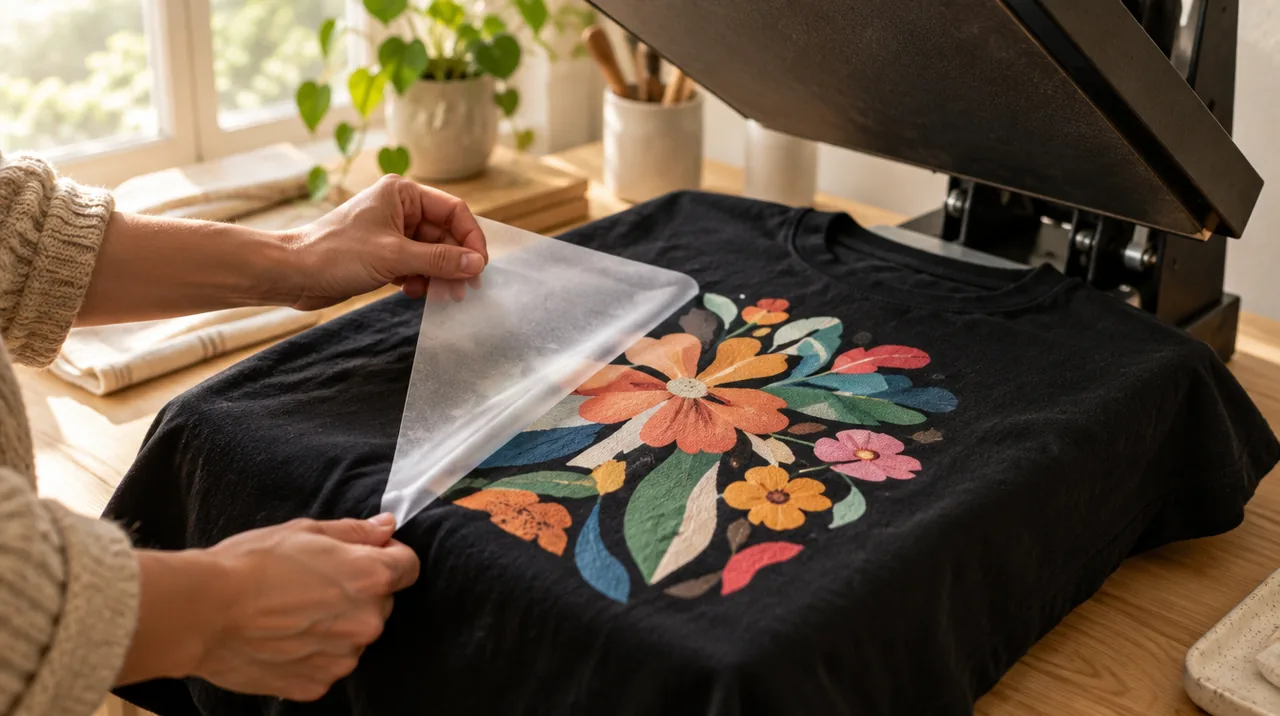
The print sits on top of the fabric rather than soaking in. For a side-by-side look, see our DTF vs. screen printing guide.
How is sublimation different from other t-shirt printing methods?
Sublimation uses heat to turn dye into a gas that bonds with polyester fibers, so the design becomes part of the fabric instead of a layer on top. That is why it works on light-colored, high-polyester garments and not on cotton or dark shirts. Our guide to what sublimation printing is walks through the process step by step.
Sublimation printer maker Sawgrass publishes heat press settings for polyester fabric, which shows how closely the process is tied to the material. That is also why sublimation is popular for team jerseys and performance shirts with all-over color.
DDESIGNS offers custom sublimation, with a minimum confirmed at quote.
When should you choose embroidery instead of printing?
Embroidery stitches your design into the fabric with thread, which gives a raised, textured finish. It works well for polos, jackets, quarter-zips and hats, especially for a left-chest business or school logo.
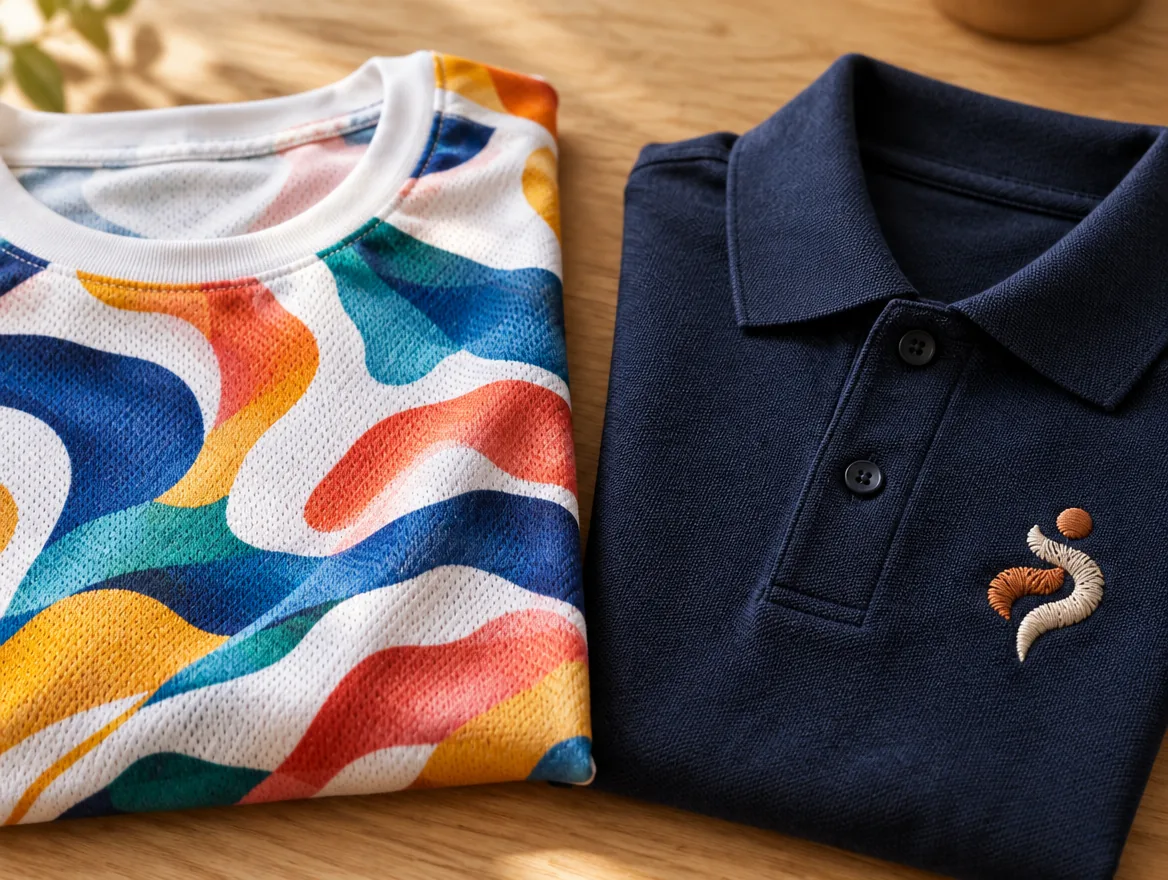
Embroidery is less suited to very fine detail or a large full-back graphic. The design is digitized into a stitch file first, and DDESIGNS confirms the embroidery minimum with your quote. See how our custom embroidery in Springfield works, from digitizing to the proof.
Which type of t-shirt printing is best for your order?
The best type of t-shirt printing is the one that matches your quantity, design and fabric. Use this as a starting point, then let a person who prints every day check it against your artwork.
- Count your shirts. A large group order of one design points toward screen printing. A handful of shirts points toward DTF.
- Count the colors. One to three solid colors suit screen printing. Photos, gradients or many colors suit DTF.
- Check the fabric. Light polyester jerseys suit sublimation. Cotton and blends suit screen printing or DTF.
- Pick the finish. For a stitched, dressed-up look on polos or hats, choose embroidery.
- Think about who orders. If families or employees should order their own sizes, a free online store has no minimum and takes the order forms off your plate.
FAQ: Types of T-Shirt Printing
What is the most durable type of t-shirt printing? Durability depends on the method, the garment and how the shirt is washed. Screen printing, sublimation and embroidery all hold up well when they’re matched to the right fabric and cared for properly. Turning shirts inside out and washing cool helps any decoration last. Our guide on how to wash screen-printed shirts covers the details.
Which t-shirt printing method is cheapest? There isn’t one cheapest method for every order. Screen printing often has the lowest cost per shirt on larger runs because setup is spread across every shirt. For a small order or a design with many colors, DTF can come out ahead. DDESIGNS gives a free quote so you can compare for your exact order.
Is DTF printing better than screen printing? Neither is better across the board. DTF printing is great for small orders and full-color, detailed art, and DDESIGNS has no minimums for DTF. Screen printing usually wins for the same design on a larger group order and gives a classic print feel. Many orders could go either way, and DDESIGNS will tell you which makes more sense.
Can you print on polyester shirts? Yes, but the method matters. Sublimation is made for light-colored polyester. Screen printing and DTF can also work on polyester when the ink or transfer suits the fabric. Polyester dye can sometimes bleed into a print, so the exact garment matters. Our guide to printing on polyester shirts explains what to check.
What’s the difference between DTF and DTG printing? DTG (direct-to-garment) printing sprays ink straight onto the shirt with an inkjet printer, and works best on cotton. DTF printing prints the design onto a film first, then heat-presses it onto the shirt, so it works on a wider range of fabrics. DDESIGNS offers DTF printing; DTG isn’t on its service list.
Not sure which one you need? Ask us.
You don’t have to pick the method yourself. Send DDESIGNS your design, a rough count and your date, and our team will recommend the method that fits your order and budget, with free artwork help from our in-house artists. Delivery dates are set at the time of purchase, so you’ll always know exactly when your order will arrive.
Get a free quote from DDESIGNS or call 417-839-5222.