
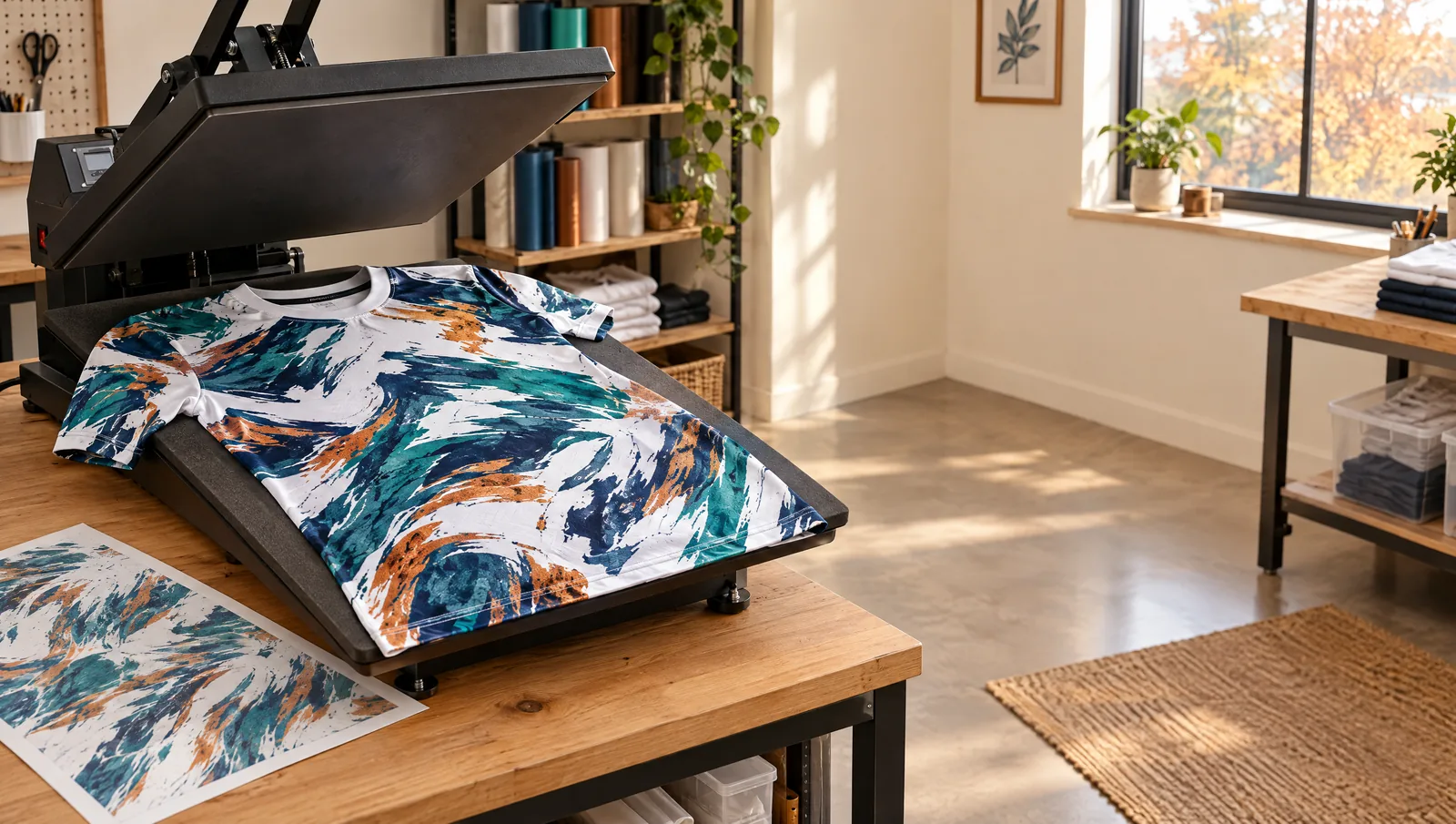
What is sublimation printing? It’s a way of decorating fabric where heat turns special dye into a gas that bonds with polyester fibers, so the design becomes part of the fabric instead of a layer on top. It works on white or light-colored polyester and high-polyester blends, which is why it suits team jerseys and all-over designs.
Key takeaways
- Sublimation dyes the design into the fabric, so there is no raised ink layer to crack or peel.
- It needs polyester or a high-polyester blend in white or a light color; it doesn’t work on cotton or dark shirts.
- It’s a strong fit for jerseys, performance wear and designs that run edge to edge.
- For cotton tees or dark garments, DTF printing or screen printing is usually the better choice.
- DDESIGNS offers custom sublimation in Springfield, Missouri, with a minimum confirmed at quote.
What is sublimation printing, in plain terms?
Sublimation printing uses heat and pressure to move dye from a printed transfer sheet into polyester fabric. The word “sublimation” describes a solid turning straight into a gas without becoming a liquid first, and that’s what the dye does inside the heat press.
Once the dye cools, it’s locked inside the fibers. You can run your hand over a sublimated jersey and feel only the fabric. That’s the big difference from methods that lay ink or film on top of the shirt.
Printer maker Mimaki describes the same basic idea in its guide to sublimation printing: the design goes from sublimation paper onto the material under heat and pressure, and the color ends up embedded rather than sitting on the surface.
How does sublimation printing work, step by step?
Sublimation printing works in four steps: print the design in reverse on transfer paper, line it up on the garment, press it with heat, and let the dye set as it cools. Here’s how that looks on a team jersey at DDESIGNS.
- Design. Your artwork, roster and color choices are set up on screen. DDESIGNS’ in-house artists help with layout, names and numbers, and sponsor logos.
- Print the transfer. The design is printed in reverse onto transfer paper with sublimation inks.
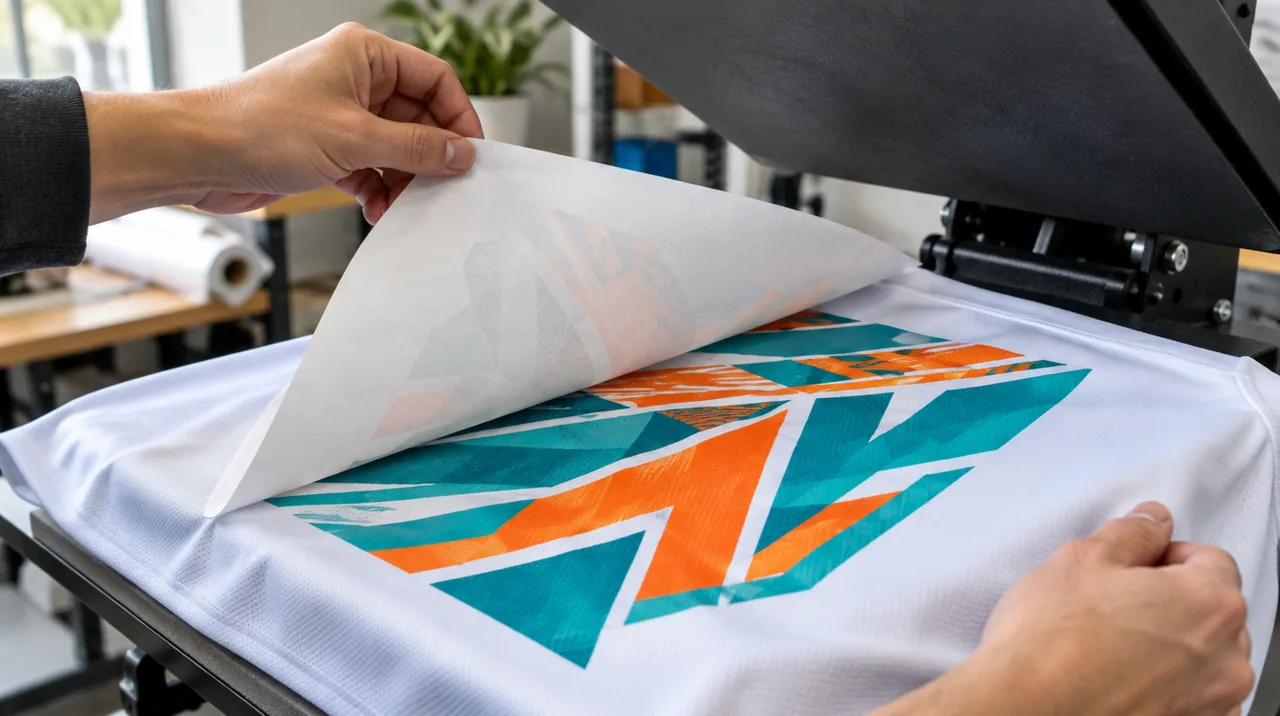
- Press. The paper goes onto the garment, and a heat press applies heat and pressure. The heat turns the dye into a gas and opens up the polyester fibers so they take in the color.
- Set. As the fabric cools, the dye returns to a solid inside the fibers. The paper comes off, and the design is part of the garment.
Temperature and time depend on the fabric. Sublimation supply maker Sawgrass publishes heat press settings by material, and the right setting is part of what the shop works out for each garment.
What can you sublimate on?
Sublimation works on polyester fabric and high-polyester blends in white or light colors. The dye needs synthetic fibers to bond with, and it’s see-through, so the fabric color underneath shows through the design.
For apparel, that means sublimation is a natural fit for:
- Team jerseys and uniforms, including names, numbers and sponsor logos
- Performance and athletic shirts made from light polyester
- All-over designs that cover the front, back and sleeves
- Bold event shirts where the color runs across the whole garment
Can you sublimate on cotton?
No, not in a way that lasts. Sublimation dye bonds with polyester, not natural fibers like cotton, so a sublimated design on a cotton shirt washes out. If your group wants soft cotton tees, screen printing or DTF printing is the better route, and DDESIGNS will tell you which fits your order.
Can you sublimate on dark shirts?
Not well. Sublimation can’t print white and can’t lighten the fabric, so a bright design on a black or navy shirt barely shows. Mimaki’s guide notes the same limit: sublimation designs need a white or very light background. For dark garments, DTF printing or screen printing gives you the bright colors you’re picturing.
What is sublimation printing good for?
Sublimation printing is best when you want a lot of color, a design with no edges, or a different name and number on every piece. Because each garment is printed individually, it handles personalization well.
| What you want | Why sublimation fits |
|---|---|
| A design that covers the whole shirt | No print-area box: color can run across seams and sleeves |
| Names and numbers on every jersey | Each piece is printed on its own, so details can change piece to piece |
| A light, breathable feel | No ink layer on the fabric to trap heat or add weight |
| Gradients, photos or detailed art | Many colors print at once, with no screen for each color |
| A print that won’t crack or peel | The dye is inside the fibers, not sitting on top |
Not sure sublimation is right for your order? Ask DDESIGNS for a free quote and tell us what you’re picturing. We’ll recommend the method that fits.
What are the disadvantages of sublimation printing?
The main disadvantages of sublimation printing are its fabric and color limits: it needs light-colored polyester, it can’t print white, and it doesn’t work on cotton. Beyond that, a few practical points are worth knowing before you order.
- Fabric choice is narrower. You’re picking from polyester and high-polyester garments, not the full range of cotton tees and hoodies.
- Light colors only. The garment color sets the lightest color in your design.
- Creases and seams can show. On a pre-sewn shirt, folds or seams that don’t sit flat in the press can leave small white streaks. Mimaki also notes that fabric can shrink slightly during pressing, so designs are planned with that in mind.
- Simple one-color logos may suit another method. For a single centered logo on a cotton tee, screen printing or DTF is often the simpler choice.
None of these are problems once the garment and design are matched to the method. That’s the conversation DDESIGNS has with you at quote time.
How is sublimation different from DTF and screen printing?
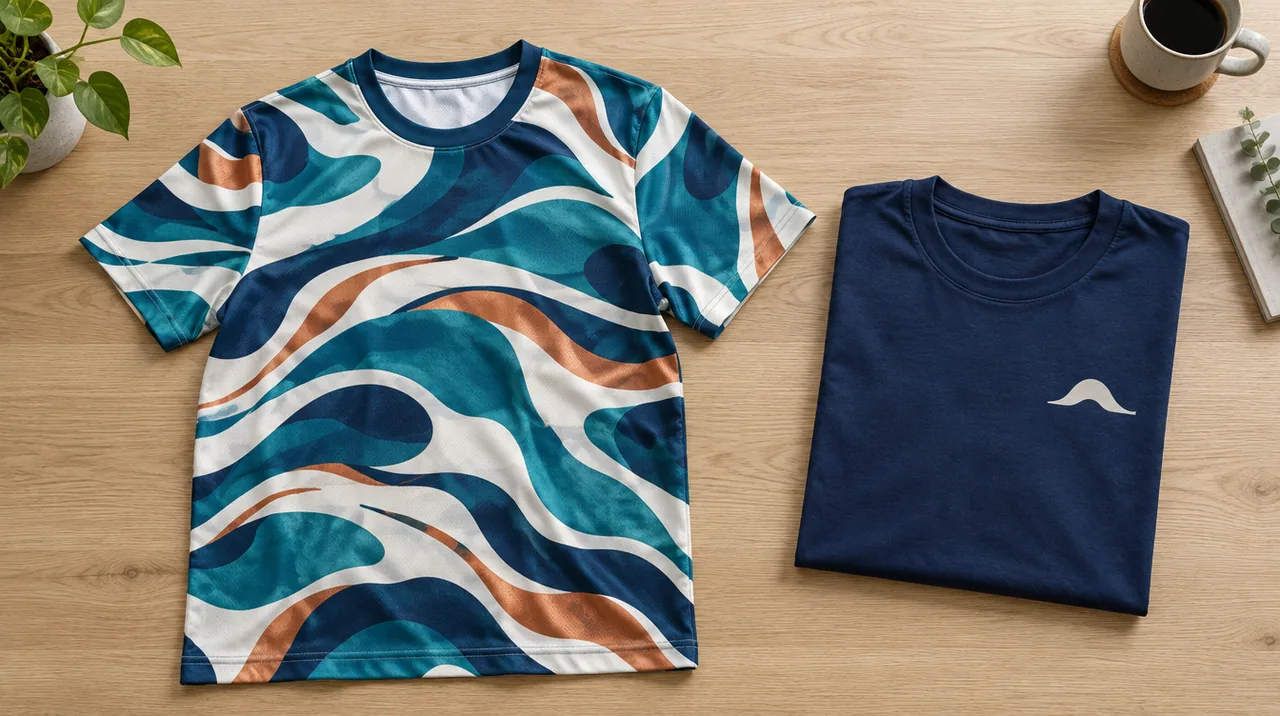
Sublimation dyes the design into polyester, while DTF printing presses a printed film onto the fabric and screen printing pushes ink through a mesh screen onto it. That one difference decides which fabrics and colors each method can handle.
| Sublimation | DTF printing | Screen printing | |
|---|---|---|---|
| How it works | Dye bonds inside polyester fibers | Printed film heat-pressed onto the shirt | Ink pushed through a mesh screen, one per color |
| Fabrics | White or light polyester and high-poly blends | Cotton, blends and polyester, light or dark | Cotton, blends and suitable polyester |
| Feel | No added layer | A thin layer on the surface | Depends on the ink and coverage |
| Good for | Jerseys, all-over designs, personalization | Full-color art, small runs, mixed garments | The same design across a larger group order |
| DDESIGNS minimum | Confirmed at quote | No minimums | Confirmed at quote |
For a side-by-side look at every method DDESIGNS offers, see types of t-shirt printing. If your order is on polyester but you’re not sure which method suits it, our guide to printing on polyester shirts walks through the choices.
How do you order sublimated apparel from DDESIGNS?
Ordering sublimated apparel from DDESIGNS starts with a free quote. Tell us what the garments are for, how many you need and the date you need them, and we’ll take it from there.
Have these ready if you can:
- Garment and quantity, with youth and adult sizes
- Artwork, or an idea our artists can build from
- Your roster, if each piece gets a name or number
- Colors, including any school or brand colors to match
- Your date: delivery dates are set at the time of purchase, so you’ll always know exactly when your order will arrive
Sublimation has a minimum we confirm at quote.
FAQ: Sublimation Printing
Does sublimation printing fade or wash out? On the right fabric, a sublimated design holds up well because the dye is inside the polyester fibers rather than on top of them, so there’s nothing to crack or peel. Follow the care label that comes with the garment. On cotton or low-polyester fabric, sublimation dye doesn’t bond properly and will fade, which is why DDESIGNS only uses it on suitable polyester.
Is sublimation the same as dye sublimation? Yes. “Sublimation,” “dye sublimation” and “dye-sub” all describe the same process: a printed dye is turned into a gas with heat and absorbed into polyester. You’ll also hear “sublimated jerseys” or “sublimated uniforms,” which simply means garments decorated this way.
Can you sublimate on a 50/50 blend shirt? You can, but the result is softer and less vivid, because only the polyester part of the fabric takes the dye. The more polyester in the shirt, the brighter the print. For a blend with lots of cotton, DTF printing or screen printing usually gives a cleaner result, and DDESIGNS will suggest one when you request a quote.
Can every jersey on a team have a different name and number? Yes. Each sublimated piece is printed on its own, so names, numbers and even colorways can change from one jersey to the next. Send DDESIGNS your roster with sizes, and our artists will set up each piece to match it.
Is sublimation good for business or school shirts? It can be, when the shirts are light-colored polyester and the design is bold or all-over, like event shirts, run club tees or spirit wear for a game day. For everyday cotton staff shirts or a simple logo, screen printing, DTF printing or embroidery is often a better fit. DDESIGNS helps schools, churches and small businesses pick the right one.
Ready to make it yours?
Sublimation printing is the right call when you want color everywhere, a light feel and a design that’s part of the shirt. When it isn’t the right fit, we’ll say so and point you to the method that is.
DDESIGNS has been helping Springfield-area teams, schools, churches and businesses look good since 2008. See our custom sublimation service, or request a free quote and tell us about your order. We make you look good.