
Quick answer: Printing on polyester shirts can work with screen printing, DTF, or sublimation, depending on the exact garment and design. Check fiber content, color, stretch, and heat sensitivity before choosing a method. Polyester dyes can migrate into surface decorations, so suitable inks or transfers and garment-specific testing matter more than a general “works on polyester” claim.
A lightweight jersey, a smooth work polo, and a stretchy training shirt can all contain polyester. Giving your printer the specific style and color is the first step toward choosing a compatible decoration.
Polyester decoration methods at a glance
| Method | A useful starting point for | What needs checking |
|---|---|---|
| Screen printing | The same logo repeated across a group order | Ink compatibility, curing, stretch, and bleed control |
| DTF or another suitable transfer | Detailed artwork or smaller runs on an appropriate garment | Transfer type, dye resistance, heat tolerance, and finished feel |
| Sublimation | Designs planned around suitable light polyester apparel | Fabric suitability, base color, artwork, and available print areas |
This is a discussion guide, not a compatibility guarantee. DDESIGNS has no minimums for DTF printing; screen printing and sublimation have minimums confirmed at quote.
Printing on polyester shirts starts with the exact garment
“Polyester” describes a fiber, not a complete garment specification. A lightweight mesh jersey, a smooth polo, and a stretchy training shirt can all contain polyester and behave differently during decoration.
Before committing to a blank, collect:
- The manufacturer and style number, if you already have a shirt in mind.
- Fiber percentages, including cotton, polyester, and spandex.
- The specific color or pattern you want.
- Whether the fabric has stretch, mesh openings, or a surface treatment.
- The artwork, approximate print size, and placement.
- Your quantity, size range, and event date.
A product link or clear photo of the label is more useful than “a dry-fit shirt.” If you have already bought garments, say so early and ask whether they can be accepted and evaluated. Avoid purchasing the full order before compatibility is discussed.
Our coach’s guide to custom team uniforms covers the other details that help keep a team order organized, including sizes, names, and numbers.
Understand dye migration without becoming an ink expert
Dye migration happens when color from the garment moves into the decoration. Picture a white logo on a red polyester shirt taking on a pink tint. That is different from a thin white print simply allowing the red background to show through.
Heat used during decoration can contribute to migration, and a problem may appear after the garment initially looks fine. The STAHLS’ dye migration handbook explains why polyester dyes, fabric color, and the decoration material all matter. Heavily dyed or already sublimated fabrics deserve particular attention.
This does not mean every dark performance shirt will bleed. It means “we printed another polyester shirt last week” is not enough information to approve a different style and color. An opaque white base and a dye-blocking system also serve different purposes; covering the background is not automatically the same as controlling migrating dye.
For buyers, the takeaway is simple: give the shop the exact garment details and room to evaluate the combination before the full run.
Screen printing needs a suitable ink system
Screen printing can be a good fit when a group needs the same design repeated across an order. A straightforward team mark or business logo may be well suited to the process.
Polyester needs an appropriate ink system, however. Ink manufacturer Avient’s performance-wear guidance discusses bleed resistance, lower curing temperatures, and blocking layers as parts of managing the fabric’s dyes. Those are production choices for the decorator, not settings the buyer needs to memorize.
Lower heat alone is not a universal fix. The ink still has to cure according to its manufacturer’s requirements. Avient’s guide to polyester printing best practices specifically warns against both undercuring and overcuring.
When discussing screen printing with DDESIGNS, describe the finished result you want: a bold mark, a light feel, a design that stretches with the shirt, or a consistent team appearance. Those goals help guide the garment and production choices together.
DTF and other transfers need fabric-specific consideration
A detailed, multicolor logo or a smaller order may lead the conversation toward DTF printing. DTF stands for direct-to-film: the artwork is prepared on film and transferred to the garment with heat.
Do not assume that every transfer sold for polyester is interchangeable. Compatibility includes more than whether the design initially sticks. The combination also needs suitable stretch, dye resistance, and a heat application that the garment can tolerate.
For example, Transfer Express identifies different transfer products for heat-sensitive polyester, stretch fabrics, and sublimated polyester. That range illustrates why the material choice matters; it is not a statement that DDESIGNS uses every product listed there.
Tell the shop if the shirt will be fitted closely, worn for sports, or repeatedly stretched while getting dressed. A small chest mark and a large solid front panel can feel quite different even when they use the same method.
Sublimation starts with a different garment conversation
Sublimation introduces dye into compatible polyester rather than building a conventional print layer on its surface. Sawgrass describes the process as using heat to transfer dye into polyester or other suitable surfaces.
It can be worth discussing when your design and garment are being developed together. It is not an automatic way to add a bright white logo to a finished dark shirt. Shirt color and the intended artwork still determine whether the process fits.
If you already have a dark polyester polo and only need a left-chest logo, say that first. If you are starting from scratch with a coordinated team look, say that instead. Those are different projects, even though both involve polyester.
Evaluate comfort and appearance together
A shirt is not successful just because the logo is readable. People also need to enjoy wearing it.
For a lightweight performance tee, consider whether the design really needs a large solid background. Open areas within the artwork can reduce the amount of surface covered by the decoration. For a work polo, a smaller logo may suit the garment’s purpose better than a full front graphic.
Ask these practical questions before approval:
- Will the design sit on a smooth area, away from seams and mesh transitions?
- Is the artwork readable at the proposed size?
- Does the decoration suit how much the fabric stretches?
- Is a sample or compatibility check appropriate for this garment?
- What care instructions apply to the finished shirt?
A digital proof is helpful for layout and spelling. It cannot demonstrate the feel of the actual shirt or prove how a particular dye and ink combination will behave.
FAQ: printing on polyester shirts
Can you screen print on 100% polyester? Yes, if the specific garment is suitable and the shop uses an appropriate ink system. Polyester content alone does not establish compatibility. Color, dye behavior, fabric construction, stretch, and curing requirements all deserve attention.
Why did a white logo on polyester turn pink? Garment dye migration is one possible cause, particularly on a red shirt, but the appearance should be assessed before a cause is assigned. Share photos, garment information, and care details with the printer. Thin coverage and migrating dye are different issues.
Is DTF printing suitable for every polyester shirt? No single transfer should be assumed to suit every polyester garment. The transfer and fabric need compatible heat, stretch, and dye-resistance characteristics. Ask about the exact style and color before buying a full batch of blanks.
Can sublimation print a white logo on a dark polyester shirt? Conventional dye sublimation does not add an opaque white layer to cover dark fabric. It is usually planned around white or light-colored polyester. A surface-decoration method may be a more appropriate discussion for an existing dark shirt.
Should I buy the polyester shirts before requesting a quote? Contact the shop first when you can. A product link or style number lets the printer assess suitability while you still have other garment options. If you already own the shirts, ask whether customer-supplied garments can be accepted and evaluated.
Choose the polyester shirt and print together
For printing on polyester shirts in Springfield, bring the garment details, artwork, quantity, size range, intended use, and needed-by date. Tell us whether the shirt is already chosen or still flexible.
Call 417-839-5222 or request a quote from DDESIGNS. Starting before you buy blanks gives you more room to choose an option that fits your group and your design. Delivery dates are set at the time of purchase, so you’ll always know exactly when your order will arrive.
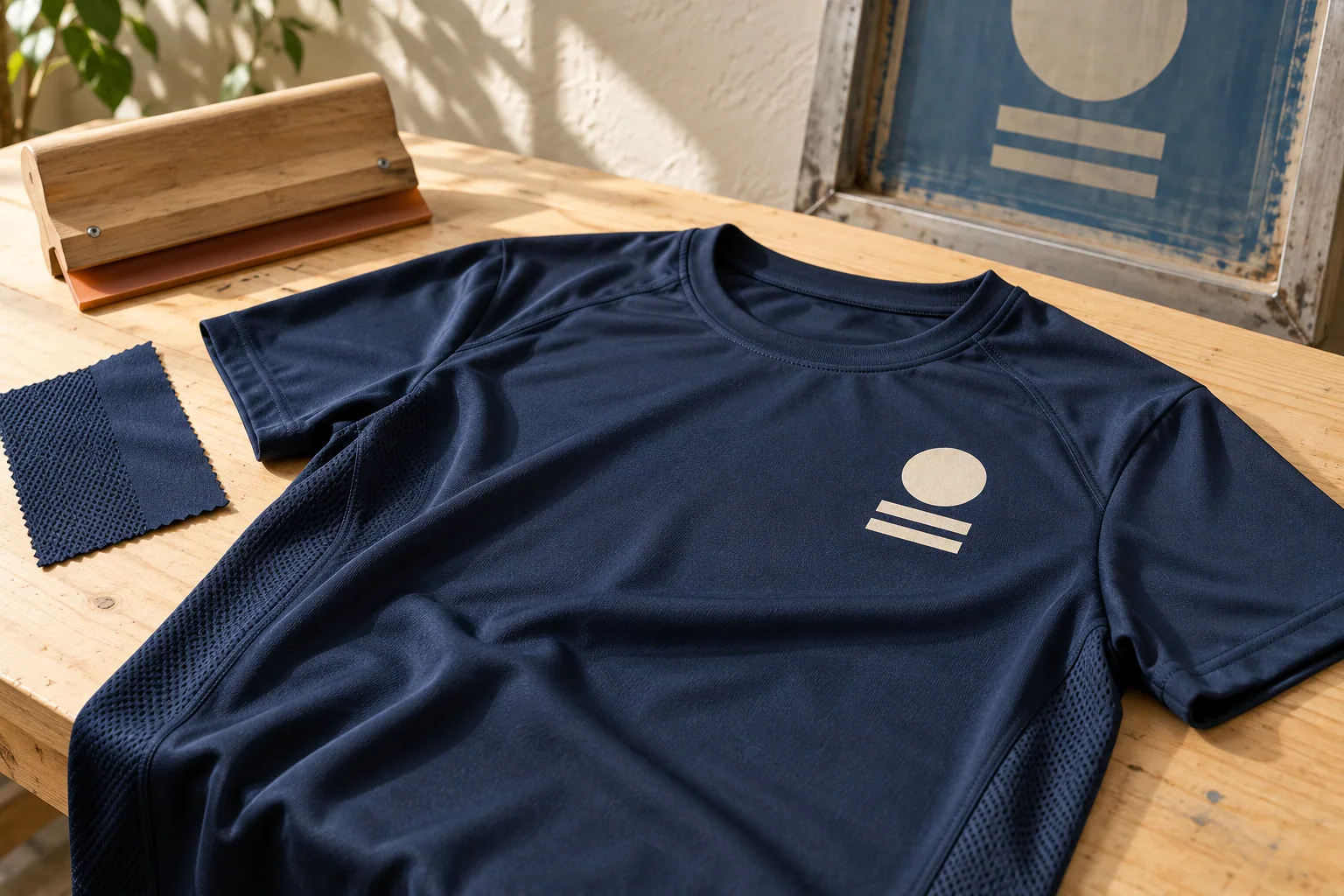
Featured image: AI-generated product illustration.