
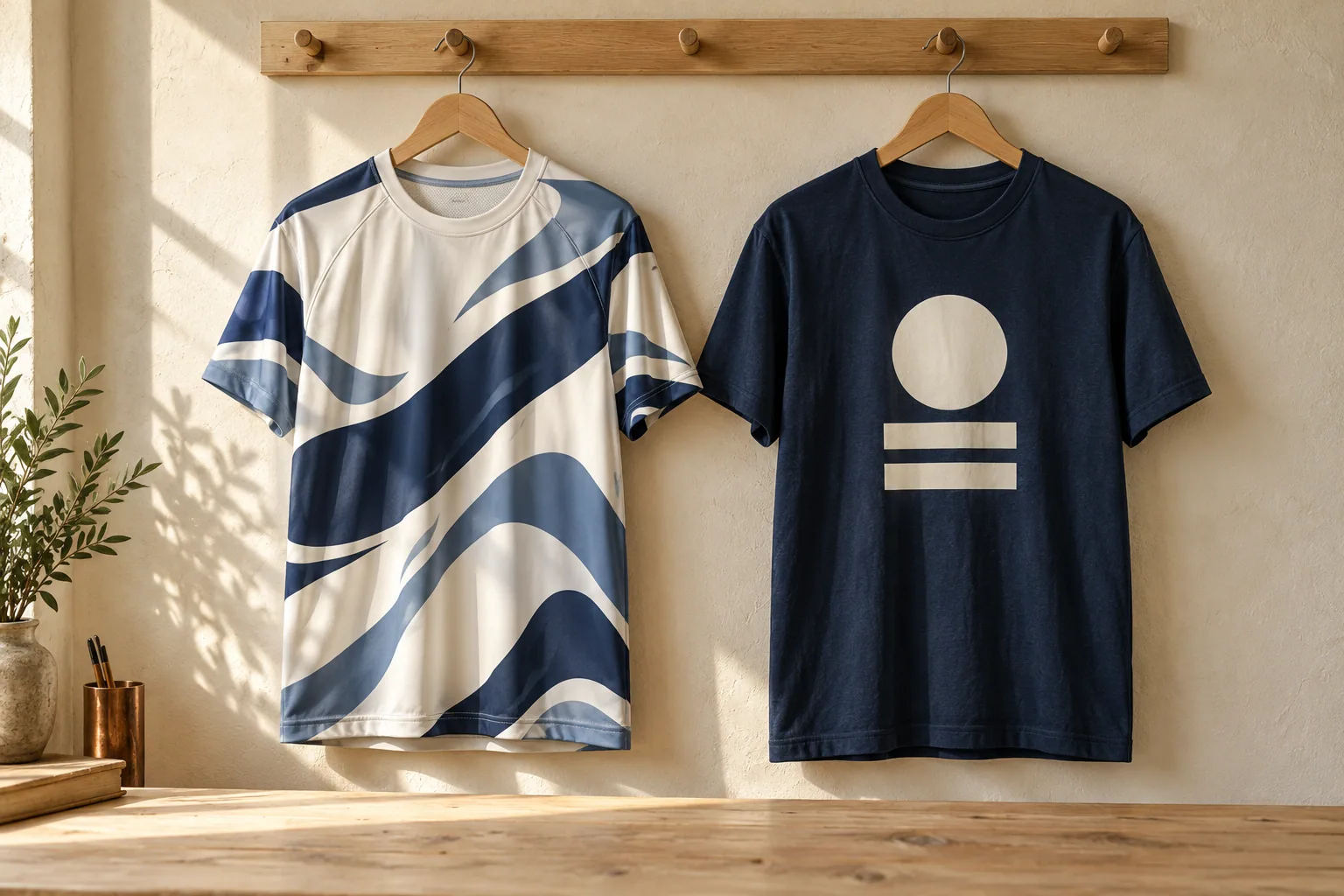
Quick answer: Sublimation is a useful starting point for personalized polyester jerseys and extensive, all-over artwork. Screen printing is a useful starting point for matching team tees, spirit wear, and repeated designs across a group order. Choose between them by comparing the garment, artwork, personalization, and complete quote, rather than assuming one process is always better or cheaper.
The sublimation vs. screen printing decision gets easier when you first decide what the shirts are for. A player’s game jersey and a parent’s cotton spirit tee can share the same team identity while needing different garments.
Compare the finished shirts you want
| Decision | Sublimation | Screen printing |
|---|---|---|
| Typical fabric starting point | White or light polyester and suitable polyester blends | Cotton, blends, and appropriate polyester styles |
| Decoration | Dye enters compatible polyester fibers | Ink is printed through mesh screens onto the garment |
| Design conversation | Extensive graphics, coordinated jerseys, and personalization | A repeated team logo or graphic in defined print locations |
| Print feel | No separate raised ink layer on the fabric | Varies with the ink system and amount of coverage |
| Individual names and numbers | Discuss as part of the garment design | Ask how variable details will be added and quoted |
| Price comparison | Compare the whole garment and included customization | Compare garment, quantity, ink colors, and print locations |
Both services have order minimums confirmed at quote. Neither method wins every order.
Sublimation vs. screen printing: what is the difference?
Sublimation uses a printed transfer and heat to move dye into polyester fibers (how sublimation printing works). Because the color becomes part of the fabric, the design doesn’t add a separate printed layer. White or light-colored polyester is the usual starting point; the fabric and its color affect the finished result. Epson’s digital-printing guide explains these material requirements.
Screen printing applies ink through mesh screens, typically with a separate screen for each color. It offers more garment flexibility, including cotton, blends, and suitable polyester styles. At DDESIGNS, screen printing is available for team shirts, school apparel, hoodies, and other group gear.
Think about the finished shirt first. Would your players wear it during a game, or would parents wear it in the stands? Those are different jobs, even when both shirts carry the same team name.
Start with the fabric your team wants
Before comparing artwork or prices, decide how you want the garment to feel.
If your group wants cotton tees for everyday wear, tell the shop that up front. If you’re ordering athletic jerseys, ask to compare appropriate performance fabrics and fits.
Traditional apparel sublimation needs polyester or a compatible polyester blend. It isn’t the right process for putting a bright design directly onto an ordinary dark cotton tee. DDESIGNS’ custom sublimation service includes team uniforms, performance apparel, and designs that cover the garment.
A useful ordering question is: “Can we see the garment options before choosing the printing method?”
That keeps the conversation focused on something your team will actually enjoy wearing. A design mockup can show placement and color, but it can’t tell you how a collar feels or whether a particular cut gives a player enough room to move.
Match the method to the design
Write down the parts of your design that matter most. That might be a small chest logo, a large mascot, sponsor logos, individual numbers, or a pattern extending across the sleeves.
For a straightforward team logo repeated across a group order, request a screen-printing quote. DDESIGNS’ pricing depends on the garment, quantity, and number of ink colors, with the applicable minimum confirmed in the quote.
For a jersey with a coordinated design across the front, back, and sleeves, start the conversation with sublimation. Ask how the proposed garment is produced and which print areas are available. Details near seams and other construction features deserve attention when reviewing an all-over design.
Don’t feel you have to redesign everything before contacting the shop. Bring the artwork you have and explain which elements are essential. A mascot may need to stay exactly as approved by the school, while a background pattern might be flexible.
Compare complete quotes, not just printing prices
“Which method is cheaper?” needs a little more information.
A quote for cotton spirit tees and a quote for personalized athletic jerseys describe different products. Comparing the totals without looking at what’s included can send you toward the wrong choice.
Give the shop the same requirements for each option:
- Total number of garments, with youth and adult sizes.
- Preferred fabric, fit, and garment style.
- Artwork and requested print locations.
- Names, numbers, or other individual changes.
- The date you need the finished order in hand.
Then check the practical details. Does the quote include every print location? Are larger sizes priced differently? Are you comparing similar garment quality? What would an additional shirt cost later?
You might also ask for two versions of the same idea: one that prioritizes your preferred design and another that prioritizes the budget. Seeing the trade-offs in actual numbers is more useful than guessing which process should cost less.
Think about comfort and care
For game-day gear, ask players what has worked for them before. Bring an existing jersey if it helps explain the fit or feel you’re looking for.
Sublimation’s dye becomes part of the material, so there isn’t a surface print layer to crack or peel. That construction is useful when you want extensive decoration without a raised printed feel. Epson describes the dye-sublimation process as embedding the design into compatible material through heat and pressure.
Still, choose the whole garment carefully. Fabric weight, cut, and construction deserve attention alongside the decoration. The printing method alone does not determine how comfortable a jersey will feel during a game.
For either method, get care instructions for the finished item and pass them along with the shirts. Avoid treating “durable” as a promise that any garment can handle any laundry routine. The care label is a better guide than a general printing comparison.
Your team may need two different kinds of shirts
Imagine a youth team ordering game jerseys plus shirts for coaches, siblings, and parents.
The players might need individual names and numbers with artwork covering much of the jersey. The supporters might simply want comfortable tees with the same logo.
That’s a reason to request two coordinated options. You can maintain the same team identity while choosing garments suited to different people.
Before approving separate products, review them together. Check that the mascot, spelling, and overall color direction are consistent. Ask how the colors will look on the specific fabrics rather than expecting every material to reproduce them identically.
This is an example of how to plan an order, not a rule that every team needs separate products. Your budget and preferences may point toward a simpler approach.
Make the roster and deadline part of the first conversation
A printing method won’t fix an incomplete size list or a misspelled player name.
Create one final roster with a row for each person and columns for size, name, and number. Have someone else check it. Be especially careful with youth versus adult sizing and names that sound alike but use different spellings.
For Springfield teams, schools, and clubs, a tournament or event date is a useful starting point, but tell the shop when you need the shirts available for distribution, too. Leave room in your own schedule to sort and hand them out.
DDESIGNS provides an artwork proof before production. Use that review to check every detail, including names, numbers, garment choices, and placement. Our team uniform ordering guide can help organize the roster and approval process.
FAQ: sublimation vs. screen printing
Is sublimation better than screen printing? It depends on the finished shirt. Sublimation is worth discussing for suitable polyester jerseys with extensive artwork; screen printing is worth discussing for repeated logos on tees and spirit wear. Fabric preference and the actual design should lead the choice.
Can sublimation be used on dark cotton shirts? Conventional apparel dye sublimation is designed around suitable polyester, usually white or light-colored. It does not create an opaque print directly on an ordinary dark cotton tee. Ask about a different decoration method if that is the garment you want.
Which method is cheaper for a team order? Compare complete quotes for the same requirements rather than assuming one method costs less. Garment style, quantity, artwork, print areas, and personalization affect the comparison. A basic cotton tee and a custom athletic jersey are different products.
Can both methods include names and numbers? Discuss names and numbers when requesting the quote. With sublimation they can be planned into the design; a screen-printed team shirt may use another decoration step for changing details. Confirm the proposed method and total cost before approval.
Will sublimated artwork peel or crack? The sublimated dye is part of compatible fabric, so there is no separate surface print film to peel or crack. That does not make the whole garment immune to wear or unsuitable laundering. Follow the finished garment’s care directions.
Choose the right method for your team
Start your sublimation vs. screen printing comparison with three decisions: what the shirts are for, which fabric your group wants, and whether each piece needs different details. Then gather the artwork, approximate quantity, and distribution date.
Call 417-839-5222 or request a team shirt quote from DDESIGNS in Springfield, Missouri. We’ll help you work through the garment and decoration choices, with each method’s minimum confirmed at quote. Delivery dates are set at the time of purchase, so you’ll always know exactly when your order will arrive.
Featured image: AI-generated product illustration.