Quick answer: DTF printing (direct-to-film) is a method where a design is printed onto a special film, coated with adhesive powder, and heat-pressed onto fabric. It produces full-color, highly detailed prints with no order minimums, making it a great fit for small runs, complex artwork, and shirts that need photo-realistic detail. DDESIGNS offers DTF printing locally in Springfield, MO.
If you’ve been shopping around for custom apparel and keep running into the letters “DTF,” you’re not alone — it’s one of the fastest-growing printing methods in the industry, and for good reason. This guide breaks down the DTF meaning in printing, how the process actually works, and when it’s the smarter choice over screen printing.
DTF Meaning in Printing: What Does DTF Stand For?
So what does DTF mean in printing? DTF stands for direct-to-film. It’s a digital printing process where full-color artwork is printed onto a clear film, then transferred onto fabric using heat and pressure. Unlike screen printing, which requires a separate stencil (or “screen”) for each color, DTF prints the entire design — gradients, shading, and all — in one pass.
That difference is what makes DTF printing on shirts so popular for detailed logos, photo-style graphics, and designs with more colors than screen printing can easily handle.
How Does DTF Printing Work? Step by Step
The process sounds technical, but it breaks down into a handful of clear steps.
Step 1: The Design Is Printed Onto Film
A special printer lays down the full-color design onto a thin, clear film using DTF ink — printing the artwork in reverse (mirrored) so it reads correctly once transferred.
Step 2: Adhesive Powder Is Applied
While the ink is still wet, a fine adhesive powder is spread over the printed film. This powder is what bonds the design to the fabric later on.
Step 3: The Film Is Cured
The film goes through a curing process (heat) that melts the adhesive powder into the ink, locking the design onto the film so it’s ready to transfer.
Step 4: The Design Is Heat-Pressed Onto the Garment
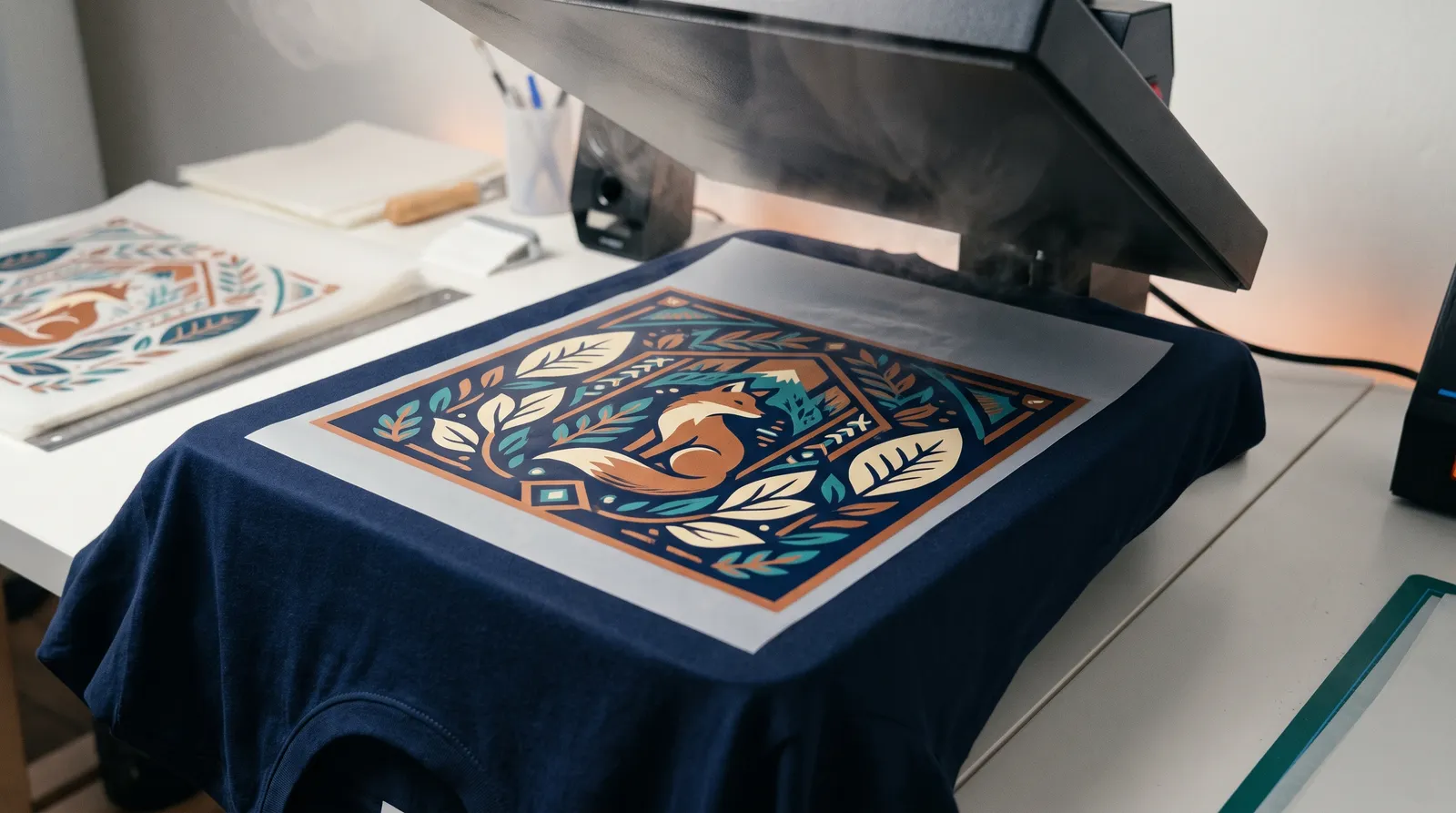
The cured film is placed on the shirt (or hoodie, hat, or bag) and pressed using a heat press. Heat and pressure melt the adhesive again, bonding the design directly to the fabric fibers.
Step 5: The Film Is Peeled Away
Once pressed and cooled, the film backing is peeled off, leaving just the design bonded to the garment — vibrant, detailed, and ready to wear.
The result is a soft-to-the-touch, durable print that can go on cotton, blends, and even some performance fabrics — a level of flexibility screen printing doesn’t always offer.
Pros and Cons of DTF Printing
Like any printing method, DTF has clear strengths and a few tradeoffs worth knowing.
Pros
- No minimums. You can order a single shirt or a large batch without a minimum quantity requirement.
- Full-color detail. Gradients, shading, and photo-style artwork print cleanly in one step.
- Works on many fabrics. DTF transfers well onto cotton, blends, and various garment types.
- Durable. The adhesive bond holds up well to regular washing when cared for properly.
- Fast setup. Because there’s no screen-making process, DTF is often quicker to get into production than screen printing for small orders.
Cons
- Cost per piece at high volumes. For very large orders of simple, single-color designs, screen printing can be more cost-effective per shirt.
- Feel varies by design coverage. Very large, full-coverage prints will have a different hand-feel than a small logo print.
- Not ideal for solid color blocking at scale. For huge runs of a simple one-color logo, screen printing is often still the more efficient choice.
Best Use Cases for DTF Printing
DTF printing tends to shine in a few specific situations:
- Small or one-off orders — a single custom shirt, a small friend group order, or a family reunion batch
- Full-color or photo-realistic designs — detailed mascots, gradients, or multi-color logos
- No-minimum team or event orders — when your group size varies and you don’t want to commit to a big print run
- Mixed-size online store orders — where each buyer might want a different size or even a different garment color
- Complex artwork that screen printing can’t easily replicate — intricate details, fine lines, or many colors in one design
DTF Printing vs. Screen Printing: A Quick Comparison
Trying to decide between the two? Here’s a side-by-side look.
| Factor | DTF Printing | Screen Printing |
|---|---|---|
| Minimum order size | None | Works best at higher quantities |
| Color complexity | Full-color, gradients, photo detail | Best for solid, limited colors |
| Best for | Small runs, detailed art, no-minimum orders | Team shirts, event tees, bulk orders |
| Setup process | No screens needed | Requires a screen per color |
| Fabric flexibility | Works on cotton, blends, more | Works best on cotton and blends |
If your order is large and the design is simple and bold, screen printing may be the more economical route. If your order is small, detailed, or a mix of sizes and colors, DTF is likely the better fit. Not sure which is right for your project? Our screen printing page has more detail on that method, and we’re always happy to talk through your specific design and quantity.
DTF Printing Is Available Locally in Springfield
DTF printing is a great option, but it still helps to have a local shop behind it — someone who can talk through your design, confirm sizing, and get your order done on a timeline that works for you. DDESIGNS has offered DTF printing right here in Springfield, Missouri since bringing the technology into our lineup, giving local schools, teams, churches, and businesses a no-minimum option for detailed, full-color apparel.
Because we’re a full-service, family-run shop, DTF is just one tool in our kit. If your project calls for a blend of methods — DTF shirts for one group and embroidered hats for another, for example — we handle it all under one roof, with the same personal service on every order.
FAQ: DTF Printing
What is the DTF meaning in printing? The DTF meaning in printing is direct-to-film. It’s a printing process where a design is printed onto film, coated with adhesive powder, cured, and then heat-pressed onto fabric.
Is DTF printing good for shirts? Yes. DTF printing on shirts produces vibrant, full-color results and works well for both small orders and detailed, multi-color designs.
How does DTF printing work in simple terms? The design prints onto a special film, gets coated with adhesive powder, is cured with heat, and is then pressed onto the garment. Once the film is peeled away, the design stays bonded to the fabric.
Is DTF printing better than screen printing? Neither method is universally “better” — they’re suited to different jobs. DTF is great for small runs and detailed, full-color designs with no minimums. Screen printing is often more efficient for larger orders with simpler, bold designs.
Does DTF printing have a minimum order requirement at DDESIGNS? No. We offer DTF printing with no minimums, so you can order exactly the quantity you need.
Can DTF printing handle detailed or photo-style designs? Yes, that’s one of its biggest strengths. DTF reproduces gradients, shading, and fine detail more easily than screen printing, since it prints the full design in one step rather than layering separate colors.
Get a DTF Printing Quote in Springfield, MO
Whether you need a handful of detailed, full-color shirts or you’re just not sure which printing method fits your project, DDESIGNS is here to help you figure it out. Call 417-839-5222 or contact us for a free quote — no minimums, quality you can trust, and real local service the whole way through.