
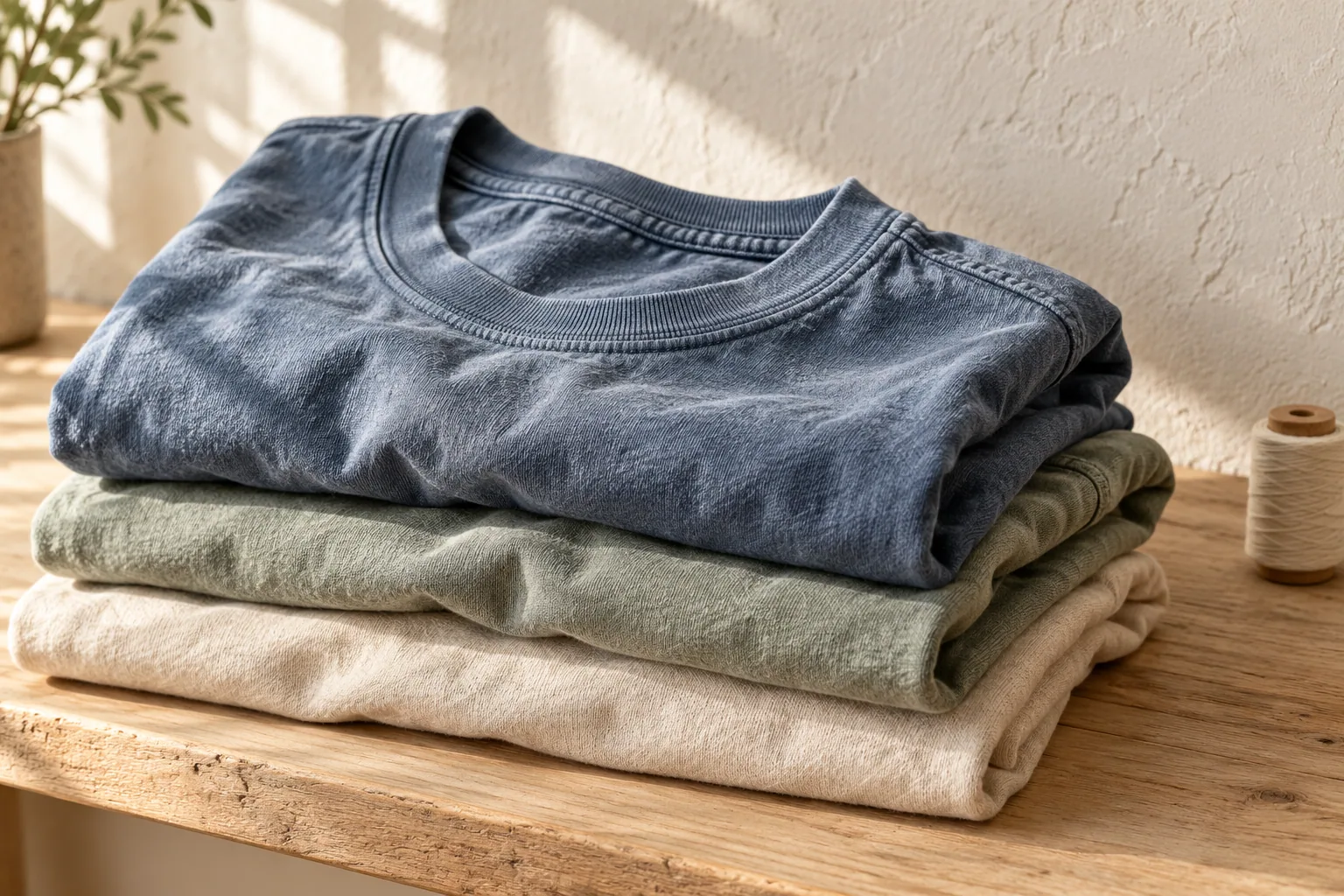
Quick answer: Garment-dyed means a shirt is colored after it has been cut and sewn. The term describes the manufacturing sequence, rather than a particular weight, fit, or printing method. Garment-dyed shirts can offer a relaxed, washed appearance, but the actual look and feel depend on the fabric, color process, and finishing used for that style.
If an earthy green or washed blue tee looks like something your group would keep wearing after the event, it is worth a closer look. Just check the whole garment before making the color your deciding factor.
What the product description does and does not tell you
| Description | What it tells you | What to check separately |
|---|---|---|
| Garment-dyed | Coloring happens after assembly | Dye process, actual color, fit, and weight |
| Pigment-dyed | A particular coloring approach was used | Shade variation and manufacturer care instructions |
| Relaxed fit | The style is intended to offer a roomier cut | Measurements for the exact garment and size |
| Heavyweight | Fabric weight is a selling feature | The listed weight and how the sample feels |
| Washed or vintage look | The desired appearance has worn-in character | Whether the effect suits your logo and uniform needs |
Treat these as separate decisions. A washed color does not tell you how the sleeves will fit or how a large print will feel.
What does garment-dyed mean during production?
In garment dyeing, the assembled item goes through the coloring process. That differs from making a shirt out of fabric that has already been dyed. Manufacturer Los Angeles Apparel explains the sequence in its description of a garment-dyed tee: sewing comes before dyeing.
The process can contribute to a familiar, broken-in appearance and feel, depending on the fabric, color system, and finishing. That is why garment-dyed shirts often come up when someone wants casual merch with a vintage character.
But avoid treating the term like a promise that every shirt will be extra soft, oversized, heavyweight, or faded. Those qualities come from additional choices made by the manufacturer. Read the specific product description and size information, then consider a sample if the feel is important to your order.
Garment-dyed and pigment-dyed are different descriptions
These terms are often used together, which makes them easy to confuse.
- Garment-dyed tells you that coloring happens after the garment is assembled.
- Pigment-dyed describes the type of coloring process used.
A garment-dyed shirt can use a pigment process, but garment dyeing is not limited to pigment colors. The Comfort Colors style and color guide distinguishes direct/reactive colors, pigment dyes, and pigment spray within its garment-dyed range.
Pigment styles are often associated with weathered shades and visible character. Other garment-dyed colors can look more saturated. If your group wants “that faded tee look,” share a reference photo rather than relying on the word garment-dyed alone.
Those manufacturer examples explain the terminology. They do not mean a particular brand, style, or color is currently stocked at DDESIGNS. Availability belongs in the quote conversation.
Choose the look your group will enjoy wearing
A washed shirt color can suit a camp graphic, a local business design, reunion apparel, or merch that feels more like a favorite weekend tee. The decision is partly about the mood you want the finished piece to have.
For example, imagine a simple cream-colored design on a muted blue shirt. It might fit a relaxed outdoor event. The same artwork on a crisp, saturated blue could feel more like traditional team apparel. Neither direction is automatically better; they communicate differently.
Think about the people wearing the shirts, too. A look that appeals to a boutique’s customers may be less appropriate for a crew whose uniforms need to coordinate closely with existing gear.
If you are choosing shirts for a group event, our guide to ordering screen-printed shirts can help you connect the garment decision with artwork, quantity, and timing.
Check fit and weight separately
Two garment-dyed tees can fit very differently. One might have a roomy body and substantial fabric; another might be shorter, more fitted, or lighter.
Ask for the details that affect everyday wear:
- Fabric content and weight.
- Garment measurements and the available size range.
- Body length, sleeve shape, and overall fit.
- Whether youth and adult options coordinate.
- The manufacturer’s washing and drying instructions.
A size chart is more useful than assuming everyone should order their usual size. When practical, compare the listed measurements with a shirt the wearer already likes, using the manufacturer’s measuring method.
Garment dyeing also is not a blanket guarantee against shrinkage. Some manufacturers make low-shrinkage claims for individual styles, but those claims should stay attached to those products. Care, construction, and fiber content still deserve attention.
Plan the artwork around the actual shirt color
The shirt becomes part of the design. A subdued background may make the artwork feel softer overall, but the lettering still needs enough contrast to be read.
Start with the message that matters most. A business name, event title, or team identifier should remain clear at the chosen print size. Tiny decorative details should not carry the information people need.
For custom screen printing, ask about the relationship between the garment color, ink colors, and the feel you want. A distressed illustration and a washed shirt can work together visually, but adding distressing to every element can make small text harder to read.
Also distinguish the garment’s softness from the print’s feel. Choosing a soft blank does not automatically make every large graphic feel equally soft. Print coverage and the decoration method are separate decisions.
Allow for color character without accepting guesswork
Some dyed effects are deliberately variable. Comfort Colors describes its Color Blast apparel as having individual variation. That kind of character can be appealing when a group wants a relaxed collection, but it is worth discussing when uniformity is essential.
If you need shirts to match an existing brand color closely, say so before choosing the blank. Do not rely on a screen image as an exact physical color reference. Ask what samples or color references are available and what degree of variation to expect in the chosen product. Our guide to PMS color references explains how to communicate an approved brand-color target.
Keep the style number and manufacturer color name with your order records. “The green shirts from last summer” is a harder starting point for a reorder than a saved product specification. A later order may still require a fresh availability and color discussion.
Read the care instructions for the finished shirt
Some pigment-dyed styles carry warnings about color transfer, especially when wet. For instance, Los Angeles Apparel’s garment-dyed pocket tee instructions distinguish care for its pigment colors.
That is a reason to check the actual instructions, not to assume every garment-dyed shirt has the same washing requirements. Once a logo is added, care needs to suit both the garment and the decoration. Ask for guidance on the finished item and pass it along to your group. Our screen-printed shirt care guide covers the washing and drying questions to check.
Do not prewash undecorated garments on your own as a production preparation step unless your printer requests it. Let the shop advise on how the chosen shirt should be handled.
FAQ: garment-dyed shirts
Is garment-dyed the same as pigment-dyed? No. Garment-dyed describes when the item is colored, after assembly. Pigment-dyed describes the coloring approach. A garment-dyed range can include pigment colors and other dye processes.
Do garment-dyed shirts shrink? Check the manufacturer’s claim and care directions for the specific style. Some products are described as low-shrinkage, but garment dyeing alone does not justify a shrink-free guarantee for every shirt. Fiber, construction, and laundering still matter.
Can garment-dyed shirts be screen printed? They can be candidates for custom screen printing, subject to the chosen shirt, dye, artwork, and ink system. Ask the shop to review the actual style and color. A soft garment does not automatically make a heavy printed graphic feel soft.
Will every shirt be exactly the same color? That depends on the product and dye effect. Some styles intentionally have individual variation, and a reorder should be checked rather than assumed to match an older batch. Explain up front if close uniformity is important.
How should I wash a garment-dyed custom shirt? Follow care directions for both the garment and decoration. Certain pigment colors have specific warnings about color transfer or separate washing. Use the instructions for your actual shirt rather than treating all garment-dyed products alike.
Find the right garment-dyed shirt for your project
Understanding what garment-dyed means helps you compare shirts, but the final choice still needs to work for your audience, size range, design, and budget. A reference photo and a short description of the feel you want are a useful place to start.
Call 417-839-5222 or request a custom shirt quote from DDESIGNS in Springfield. Share your approximate quantity, artwork, and needed-by date. We’ll discuss available options, and the applicable decoration minimum will be confirmed in your quote.
Featured image: AI-generated product illustration.