A custom hat has a small canvas and a big job. It needs to fit comfortably, make your logo readable, and feel like something a person would choose to wear on an ordinary Saturday.
That is a different challenge from fitting every detail of your business onto a shirt.
The strongest custom hat ideas begin with the wearer: an employee working outdoors, a parent cheering from the stands, or a customer buying a piece of your brand. Start there, then choose the hat shape, color, and decoration.
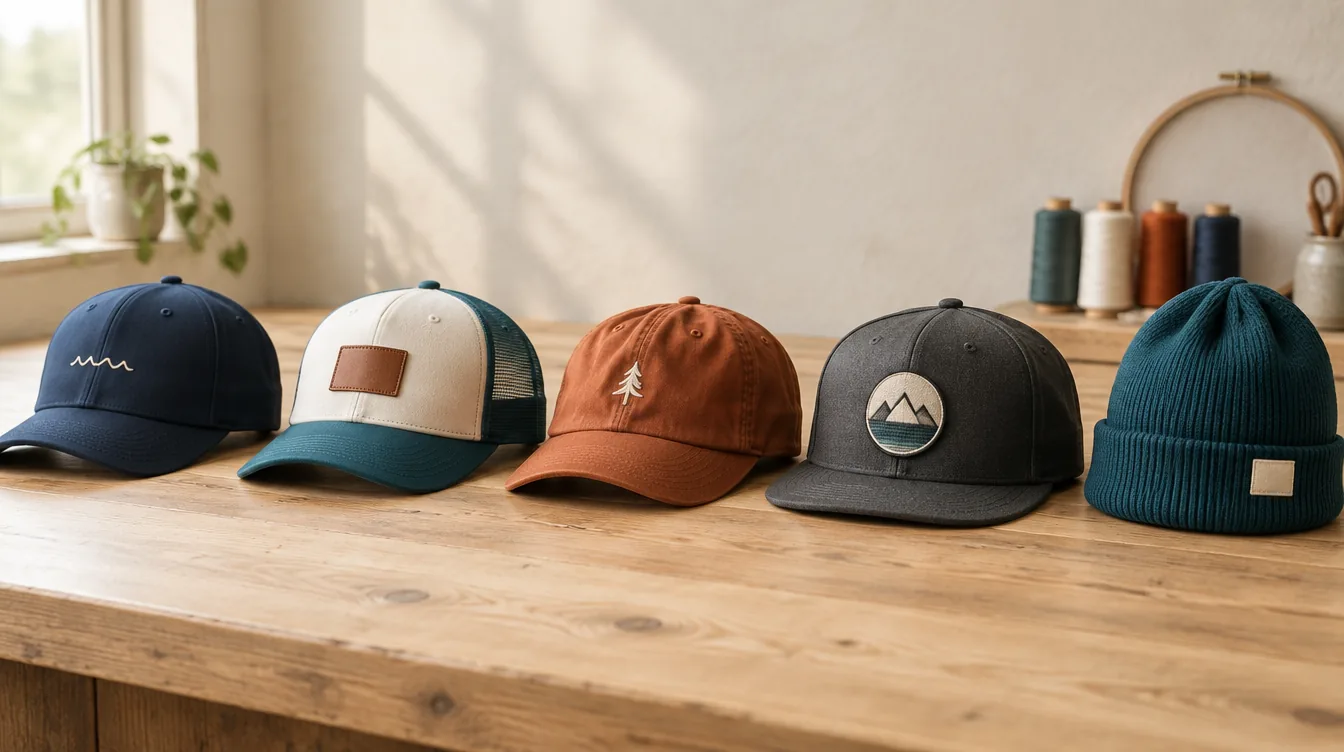
DDESIGNS offers custom headwear including caps, trucker styles, dad hats, and beanies, with embroidery and patch options. Here are ways to turn those choices into an order with a clear purpose.
1. A simple embroidered cap for your everyday crew
For a staff hat, begin with the part of your identity people recognize fastest. That might be the company name, a short wordmark, or a familiar symbol.
Try one clear mark on the front rather than your full logo, phone number, website, and tagline together. A design that reads on a business card may become crowded when adapted for a hat.
Picture a service company choosing a dark cap with a light embroidered wordmark. The useful idea is contrast: make the important detail easy to see at normal conversation distance.
Before ordering, ask whether the chosen hat fits the actual work environment and any employer clothing requirements. The examples here are design suggestions, not descriptions of completed customer projects.
2. A trucker hat with a patch for a local brand
A trucker style can give a shop, brewery, landscaping business, or community brand a casual look. Pairing it with a patch provides a defined area for the design.
Think about the outline before adding details. A simple rectangle, circle, or other compact shape can give the artwork a clear boundary. Then decide what belongs inside it.
An embroidered patch can emphasize stitched texture. A woven patch may suit finer artwork. Leatherette offers another visual direction. DDESIGNS lists all three among its headwear options, so bring the look you want and ask which treatment suits the logo.
Keep this decision practical: appearance, readability, and compatibility with the selected hat matter more than choosing a material because it sounds premium.
3. A relaxed dad hat with a small mark
Some people prefer a softer, less structured cap. A dad-hat style can be worth considering for a café, creative business, volunteer group, or understated merchandise line.
This is a good place to explore a simplified symbol instead of a complete horizontal logo. A compact icon can be easier to place while leaving the hat visually balanced.
Try a restrained color pairing first: a neutral hat with a contrasting mark, for example. If you prefer matching thread and fabric colors, ask for a preview of the effect. A subtle combination may suit the brand but make the design less readable from a distance.
Do not assume one fit will please every customer. Compare the shape with the audience in mind.
4. Team hats that work beyond game day
A team cap does not have to include the entire roster of achievements.
Start with the team name, mascot, or initials. Let the main mark lead, then decide whether a year or short secondary detail adds something useful.
For an ongoing fan item, leaving off a specific season may help the design remain relevant longer. For a commemorative event, the year may be the whole point. Neither approach is automatically better.
If players and supporters will both receive hats, check their different needs. Ask about fit options and any youth sizing requirements. An adjustable closure does not mean every hat fits every head.
Link the hat visually with your shirts or embroidered apparel, then review the items together before approving the order.
5. Beanies for a seasonal collection
A beanie offers a different kind of merchandise opportunity for outdoor crews, school supporters, and customers who want a colder-weather option.
Begin with the decoration area. A cuff changes how the design sits when the hat is worn, so ask to see the proposed placement on the actual style.
Keep the artwork compact. A short name or recognizable icon may do more than a long slogan. For businesses, it can be useful to carry the same simplified mark across a cap and a beanie rather than forcing the exact same layout onto both.
Choose seasonal products with a distribution plan. Think about when people will receive them, how they will order, and whether the item belongs in a one-time campaign or a continuing collection.
6. A limited-event hat with one memorable detail
A fundraiser, anniversary, or community gathering can provide a clear design theme.
Instead of adding every event detail, choose the part someone will want to remember. That might be the event name and year, a location reference, or a custom illustration.
Consider where the hat goes after the event. A restrained front design might remain appealing long afterward. A strongly dated commemorative design may be more meaningful to participants. Decide which result matters.
Use your event date to plan backward through design, proof approval, production, and distribution. DDESIGNS confirms delivery dates at purchase; request a timeline for the specific order rather than assuming a standard turnaround.
Embroidery or a patch?
Make this choice alongside the artwork, not after it.
Direct embroidery places the stitched design on the hat itself. A patch creates a separate visual shape that becomes part of the overall design.
Ask to compare approaches if the logo contains tiny lettering, fine lines, or a complicated border. Thread and fabric create physical limits that a screen mockup can hide. DDESIGNS adapts artwork for the curved surface of headwear, which is one reason a shirt logo may need adjustments before it goes onto a cap.
A useful question is: “Which details will still read at the finished size?”
Build a short list before approving the order
Narrow the choices to two or three combinations instead of debating every hat in a catalog.
For each option, compare:
-
Hat shape and fit.
-
Fabric and color.
-
Decoration method.
-
Logo size and placement.
-
Complete order price and confirmed minimum.
-
Delivery date and distribution plan.
DDESIGNS’ headwear orders have a minimum, confirmed with the quote. Avoid planning around an assumed quantity or borrowing a minimum from another type of apparel.
Ask about a sample when fit or construction is central to the decision. A proof is useful for reviewing the design, but it cannot show exactly how a hat feels.
Bring the idea, even if it is unfinished
You do not need a complete merchandise collection to begin. Bring your logo, the audience, an approximate quantity, and a few examples of styles you like.
Explain what you like about each reference: the fit, the understated design, the patch shape, or the colors. That gives the team direction without asking anyone to copy another brand’s artwork.
Request a custom hat quote from DDESIGNS. We can help connect the design to the right headwear so the finished hat makes sense for the people wearing it.